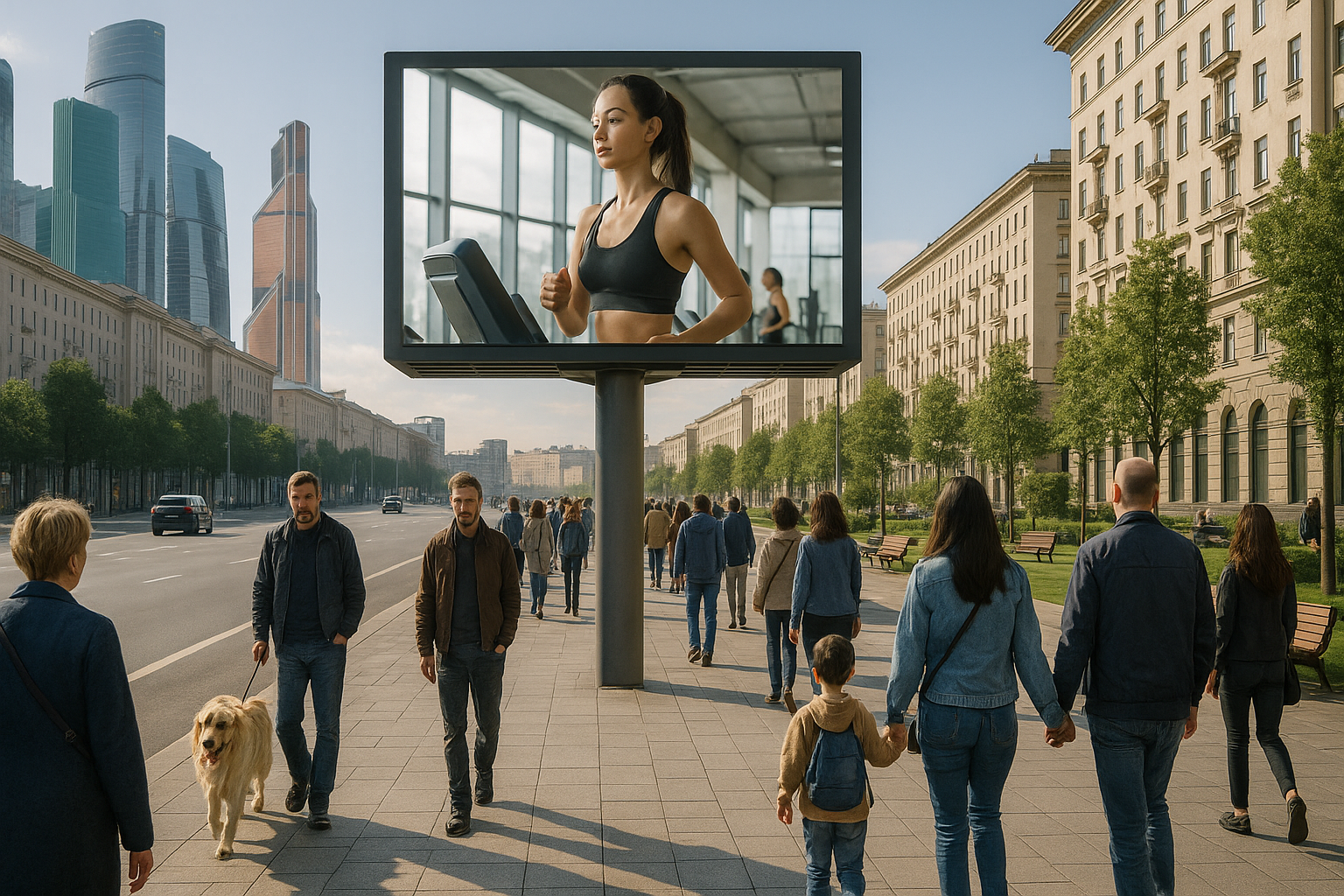
It’s difficult to accurately measure the impact of outdoor advertising on brand metrics — even when it comes to digital formats. Spirit. Fitness and Traffic (part of Okkam) found a way to solve this problem: they calculated the effect of outdoor advertising on brand awareness and the results of omnichannel campaigns through surveys of users who had seen the creatives on billboards. The findings confirmed the hypothesis that omnichannel communication delivers a stronger effect compared to placement in a single channel. The project team shared the results of their collaboration with Sostav.
Objective
Spirit. Fitness is a fitness club chain that has been operating in the Russian market for over ten years.
The company was looking for a communication channel that would help increase brand awareness — since, naturally, branded search queries have the lowest CPC and CPO. Therefore, growing their volume through stronger brand awareness is one of the key marketing goals.
The Traffic team proposed an experimental campaign. The idea was to launch outdoor advertising targeted at potential clients living or working within a 1.5-kilometer radius of the network’s clubs in Moscow — and then assess how the placements affected brand metrics. At the same time, the task was to measure results specifically among the audience that had actually been exposed to the DOOH ads, rather than just people living or working in the selected areas.
Spirit. Fitness is a fitness club chain that has been operating in the Russian market for over ten years.
The company was looking for a communication channel that would help increase brand awareness — since, naturally, branded search queries have the lowest CPC and CPO. Therefore, growing their volume through stronger brand awareness is one of the key marketing goals.
The Traffic team proposed an experimental campaign. The idea was to launch outdoor advertising targeted at potential clients living or working within a 1.5-kilometer radius of the network’s clubs in Moscow — and then assess how the placements affected brand metrics. At the same time, the task was to measure results specifically among the audience that had actually been exposed to the DOOH ads, rather than just people living or working in the selected areas.
Implementation
Step 1. The team selected digital screens located within a 1.5-kilometer radius of the clubs and launched ads to establish the first point of contact. The programmatic campaign was run through the DSP platform Omni360, provided by MasterAd (part of the Okkam group, specializing in outdoor media buying). The campaign was managed by Traffic in self-service mode, using data from the agency’s Radar database.
Step 2. After the campaign ended, ad play logs were collected: Radar compiled a segment and transferred it to MediaDesk. An integration between the platforms allowed for seamless data transfer and the creation of a unified target audience profile based on this segment.
Step 3. Through MediaDesk, the team linked the ad IDs obtained from the DOOH placements with cookies collected via the internal cross-channel Stable ID.
Step 4. A digital campaign was then launched with the goal of recruiting users who had been exposed to the DOOH ads, in order to conduct a Brand Lift study. The media inventory for the campaign was provided by the DSP Adspend.
Step 1. The team selected digital screens located within a 1.5-kilometer radius of the clubs and launched ads to establish the first point of contact. The programmatic campaign was run through the DSP platform Omni360, provided by MasterAd (part of the Okkam group, specializing in outdoor media buying). The campaign was managed by Traffic in self-service mode, using data from the agency’s Radar database.
Step 2. After the campaign ended, ad play logs were collected: Radar compiled a segment and transferred it to MediaDesk. An integration between the platforms allowed for seamless data transfer and the creation of a unified target audience profile based on this segment.
Step 3. Through MediaDesk, the team linked the ad IDs obtained from the DOOH placements with cookies collected via the internal cross-channel Stable ID.
Step 4. A digital campaign was then launched with the goal of recruiting users who had been exposed to the DOOH ads, in order to conduct a Brand Lift study. The media inventory for the campaign was provided by the DSP Adspend.
Results
Over the course of 1.5 months, more than 1.7 million users aged 21 to 45 saw the outdoor ad at least four times.
The experimental pipeline made it possible to assess the campaign’s effectiveness: through digital placements, the team gathered data on users who had been exposed to the ads and determined how many of them remembered the brand, its concept, and its key benefits.
Over the course of 1.5 months, more than 1.7 million users aged 21 to 45 saw the outdoor ad at least four times.
The experimental pipeline made it possible to assess the campaign’s effectiveness: through digital placements, the team gathered data on users who had been exposed to the ads and determined how many of them remembered the brand, its concept, and its key benefits.
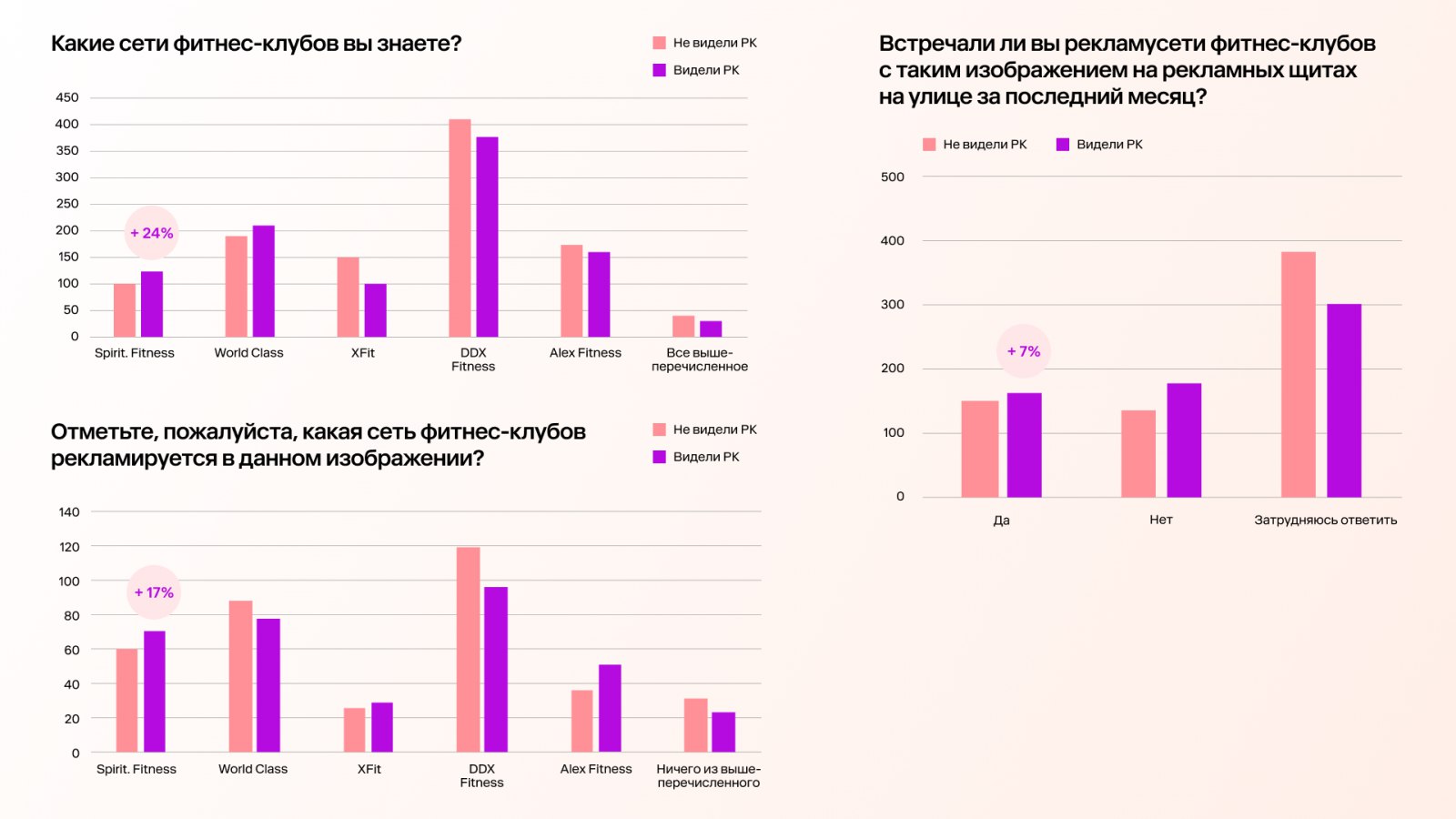
To measure the effectiveness of the placement, a Brand Lift survey was conducted among the audience identified through cross-channel Stable ID data.
Results:
A month after the DOOH campaign, the brand launched a digital campaign focused on the audience collected via Stable ID.
Results:
- Brand awareness of the Spirit. Fitness network among those exposed to the DOOH campaign increased by 24%.
- Brand recognition from the advertising materials increased by 17%.
A month after the DOOH campaign, the brand launched a digital campaign focused on the audience collected via Stable ID.
- The CTR was twice as high compared to placements without DOOH support.
- The CR reached 0.64% for the “click-to-call” goal — an excellent result for a reach-oriented campaign aimed at boosting awareness rather than direct sales.
Conclusions
To evaluate the impact of outdoor advertising, it’s essential to combine multiple analytical methods. A simple reach metric — the number of people who saw the billboards — doesn’t provide a complete picture. By using a set of technologies such as ad play logs and cross-channel data matching (Stable ID), the project team was able to obtain Brand Lift results. This approach makes it possible not only to measure brand lift, but also to assess the influence of DOOH on further audience interactions.
The combination of DOOH and digital advertising enhances not only brand awareness but also conversion performance. Although the campaign’s main goal was reach, it ultimately delivered a significant increase in engagement-related metrics. This demonstrates that DOOH not only builds brand recognition but can also drive subsequent conversions when effectively integrated into an omnichannel strategy.
To evaluate the impact of outdoor advertising, it’s essential to combine multiple analytical methods. A simple reach metric — the number of people who saw the billboards — doesn’t provide a complete picture. By using a set of technologies such as ad play logs and cross-channel data matching (Stable ID), the project team was able to obtain Brand Lift results. This approach makes it possible not only to measure brand lift, but also to assess the influence of DOOH on further audience interactions.
The combination of DOOH and digital advertising enhances not only brand awareness but also conversion performance. Although the campaign’s main goal was reach, it ultimately delivered a significant increase in engagement-related metrics. This demonstrates that DOOH not only builds brand recognition but can also drive subsequent conversions when effectively integrated into an omnichannel strategy.
Elizaveta Martirosova, Marketing Director at Spirit. Fitness:
“Thanks to Traffic’s comprehensive approach, we not only confirmed a 24% increase in brand awareness, but also saw a clear business impact: sales grew by 115% month over month and by 137% year over year. We achieved more results with the same budget — the combination of DOOH and digital proved its effectiveness both in reach and in conversions.”
Creative team
Spirit. Fitness (client)
Marketing Director: Elizaveta Martirosova
Head of Digital Marketing: Anastasia Egorova
Traffic by Okkam (agency)
Client Service Director: Olga Egorova
Senior Account Executive: Anastasia Sharafutdinova
Director of Offline Media and Integrated Products: Nadezhda Orlova
Media Planning Specialist: Anna Nadtochiy
Media Director: Ekaterina Koloskova
Head of Performance Media Marketing: Ekaterina Tertyshnaya
Head of Buying: Svetlana Kuzmina
Junior Buying Specialist: Kristina Marchenko
MediaDesk (DSP Adspend) (platform)
Client Service Director: Alena Khabaza
Client Service Group Lead: Nina Turovskaya
Radar (agency)
Head of Product Development: Maria Petridi
Head of Advertising Placement: Evgeniya Ponomareva
Omni360 (platform)
Head of Product, DSP Omni360: Ekaterina Mochalova
Spirit. Fitness (client)
Marketing Director: Elizaveta Martirosova
Head of Digital Marketing: Anastasia Egorova
Traffic by Okkam (agency)
Client Service Director: Olga Egorova
Senior Account Executive: Anastasia Sharafutdinova
Director of Offline Media and Integrated Products: Nadezhda Orlova
Media Planning Specialist: Anna Nadtochiy
Media Director: Ekaterina Koloskova
Head of Performance Media Marketing: Ekaterina Tertyshnaya
Head of Buying: Svetlana Kuzmina
Junior Buying Specialist: Kristina Marchenko
MediaDesk (DSP Adspend) (platform)
Client Service Director: Alena Khabaza
Client Service Group Lead: Nina Turovskaya
Radar (agency)
Head of Product Development: Maria Petridi
Head of Advertising Placement: Evgeniya Ponomareva
Omni360 (platform)
Head of Product, DSP Omni360: Ekaterina Mochalova